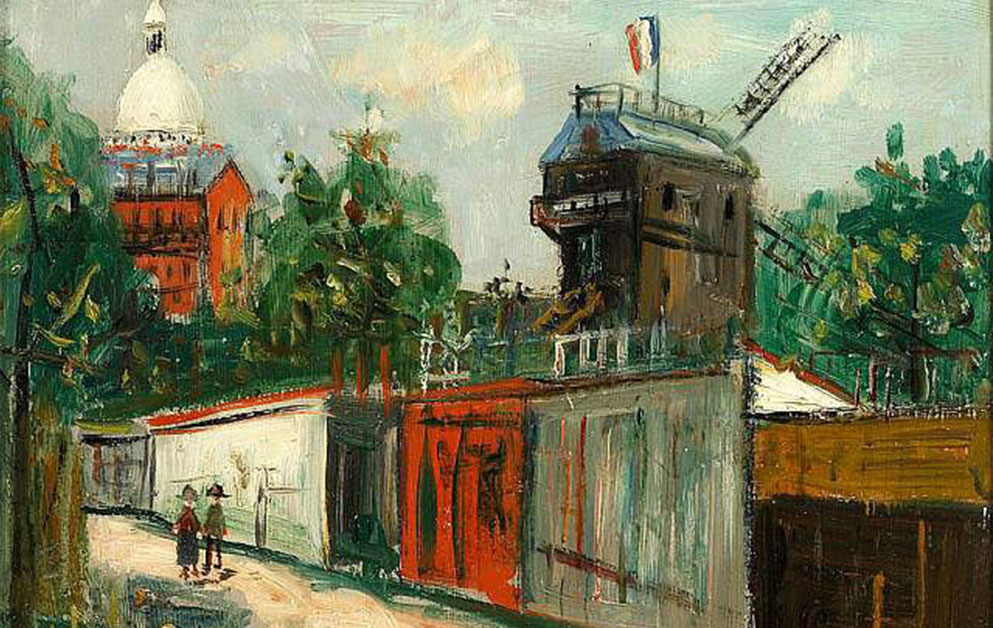

In the 19th century , the mythical spot in Montmartre, the Moulin de la Galette used to host the popular « guinguette » where all the parisians gathered. In the 80’s, it became a restaurant where actors and singers, among other celebrities came to. Taken over in 2015, the Mill reborn from its ashes, becomes an unavoidable bistromical address.
It all starts in 1812, when Nicolas-Charles Debray, miller and owner of the Blute-Fin and its farm, buys a mill on a neighbouring property, the Radet. During several years, the Blute-Fin keeps on with its original activity by supplying Paris with flour, while the Radet, grinds seeds destined for perfumery. The miller, as an inspired entrepreneur, decides to move the Radet next to the Blute-Fin and to open a « guinguette ».
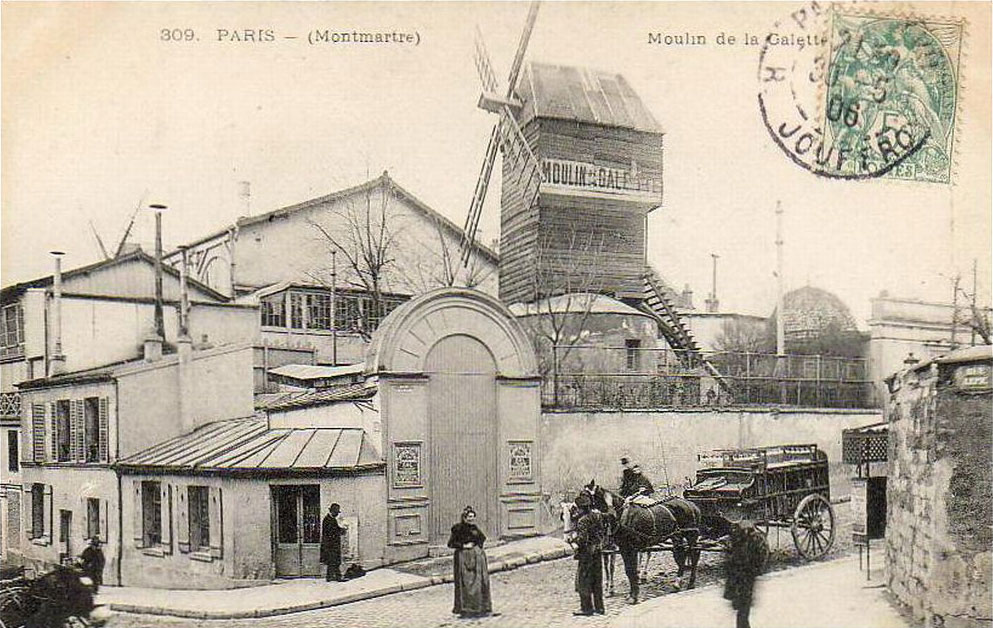
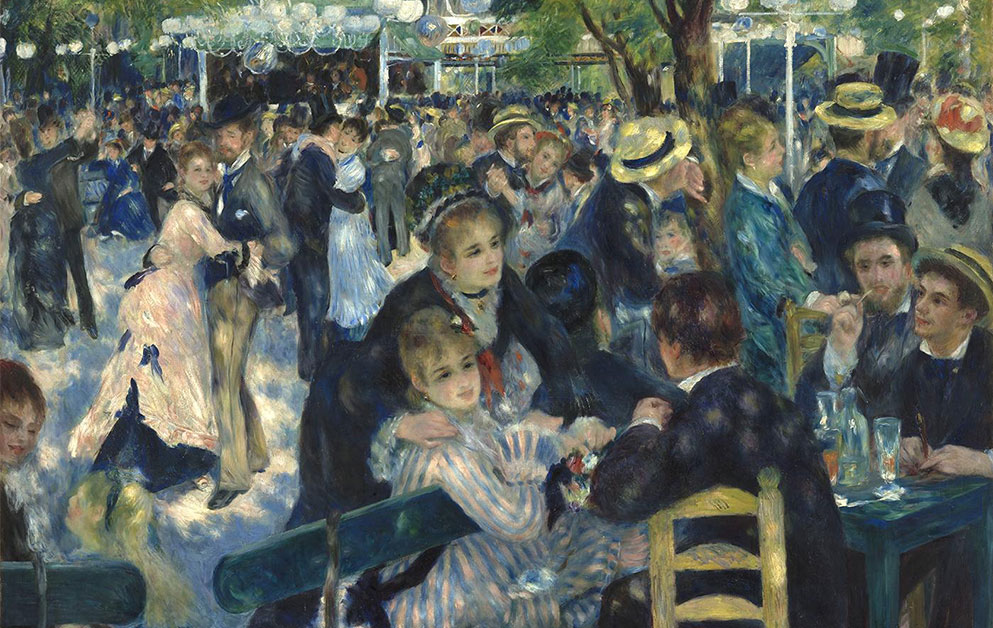
The festive atmosphere and its undeniable success will save the mill from the planned destruction by the flour milling industry. Impossible to imagine Montmartre deprived from its two superstars despite the permanent shutdown of their blades.
In the 80’s, an italian restaurant takes place under the Radet. The success is immediate and celebrities like Dalida, who lived accross the street, Claude Lelouch and Jean Marais rush to the mill.